.png)
January 22, 2026
CSDG recently partnered with McCallie School in Chattanooga to lead a real-world, community-centered design studio focused on the Ridgedale neighborhood. The two-week externship, part of McCallie’s Tornado Term (T-Term) program, gives students the opportunity to step away from traditional coursework and engage in hands-on, interest-driven projects rooted in real places and real challenges.
Through the studio, students interested in landscape architecture, planning, architecture, engineering, sustainability, and community development worked directly with CSDG and community partners to explore how parks, connectivity, and redevelopment are shaping Ridgedale's future.
Aligned with CSDG’s mission to design people-centered spaces where real life happens, the project places students in an active neighborhood planning effort in which public agencies, nonprofit partners, and private landowners are working toward shared goals. By observing real conditions, meeting with local partners, and producing maps, diagrams, and design ideas, students framed their design work around real community context and neighborhood identity.
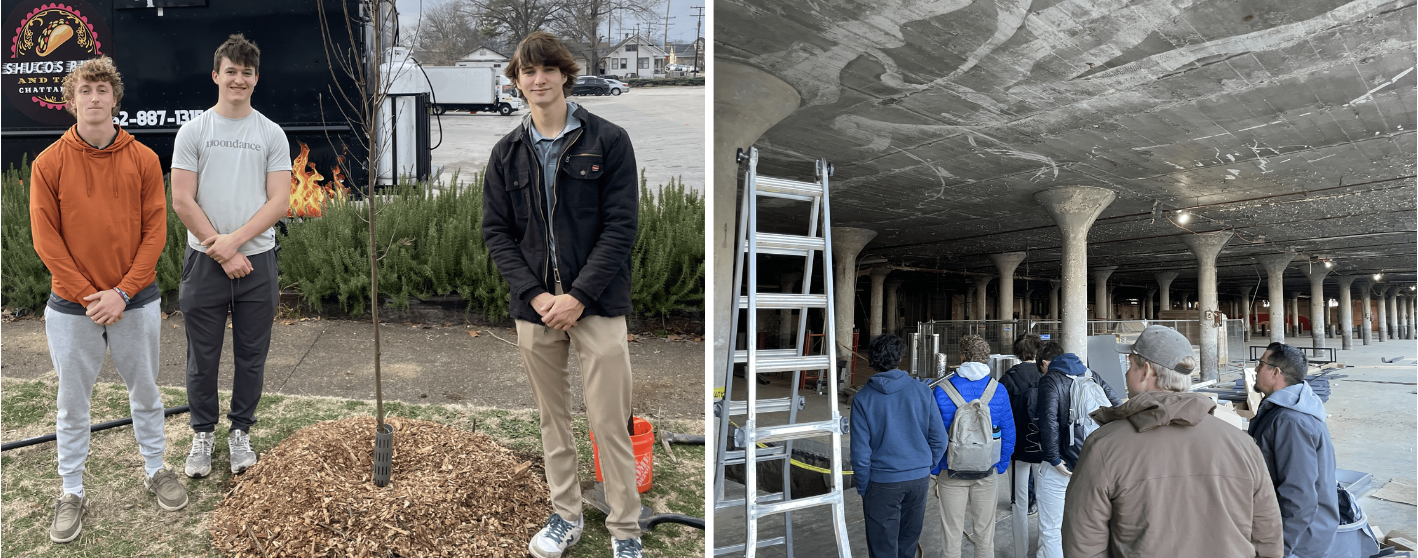
At the center of the project was an integrated public and private site study of Watkins Street Park, a city-owned park and maintenance facility, and the neighboring Ridgedale Mill mixed-use redevelopment. Together, these sites show how public space and private investment come together in the heart of a neighborhood. The studio explored how thoughtful park planning can strengthen this connection physically, socially, and operationally for residents, park users, and businesses, bringing CSDG’s tagline, Designing experiences. Shaping places., to life in one of Chattanooga’s most vibrant neighborhoods.
“This experience changed my perspective on the power of parks and how much effort goes into reshaping land for the people. It made me realize how designers don’t just change environments, they shape the way a place is experienced.” — Nik S.
Throughout the two-week program, students worked alongside designers, nonprofit leaders, city staff, and private partners, actively shaping Ridgedale. They studied land use, circulation, tree canopy, environmental conditions, and community perspectives, translating those observations into site analysis maps, opportunities and constraints diagrams, and early concept ideas.
“I believe this project is about learning the importance of a strong community and how parks can play a role in that. Landscape architecture matters because it shapes the quality of a place, and with enough awareness and collaboration, real change can happen.” — Frank C.
.png)
The studio was intentionally structured to mirror how real projects unfold. Students participated in site walks, precedent studies, partner-led neighborhood tours, and research assignments before moving into mapping, analysis, and design synthesis. They explored how people move through neighborhoods, how parks and mixed-use developments function together, how maintenance realities shape design decisions, and how urban canopy and ecology influence long-term comfort and resilience.
“Learning how to analyze a site and build a program showed me how designers shape a place based on what the community needs and how people will use it.” — Rocco U.
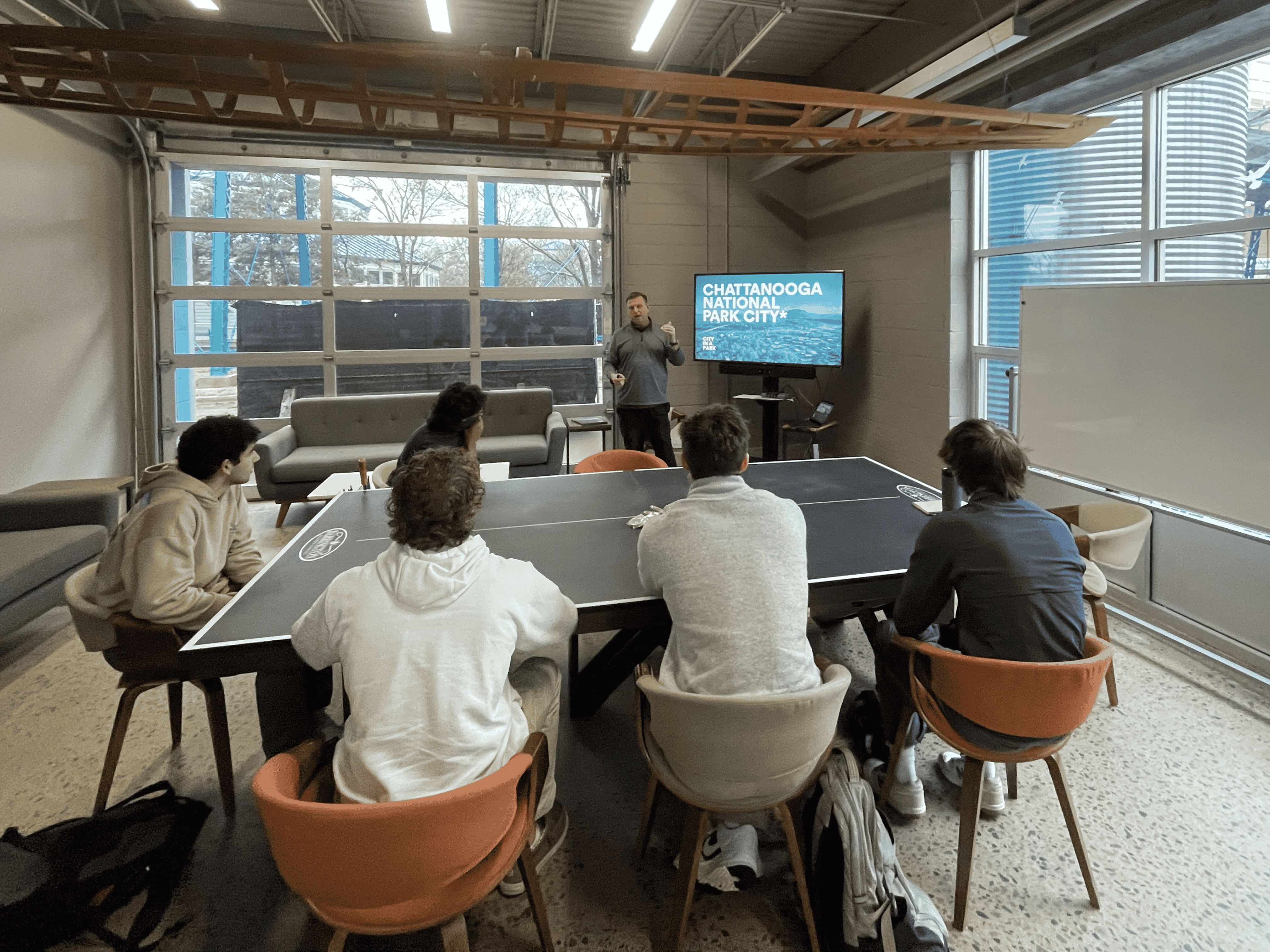
Students also engaged with a broad network of community partners, including Chattanooga Parks & Outdoors, Trust for Public Land, Chattanooga Neighborhood Enterprise, Chattanooga Tree Project, HK Architects, Chattanooga National Park City, Ridgedale Mill, Overlooked Materials, and the Ridgedale Community Association. These partners provided on-the-ground insight into park operations, housing, redevelopment, urban forestry, stewardship, and neighborhood history.
“The past few weeks made me realize how much people’s effort shapes a city and how parks make a big difference in how a place looks and feels.” — Zain R.
The project concluded with students sharing their design ideas and receiving feedback from a representative of the Ridgedale Community Association. In the coming weeks, the project team plans to gather community partners for a broader roundtable, where students will present their work and continue conversations around design, community context, and collaboration. The goal is to create space for open dialogue between students and partners, connecting public and private-sector perspectives and reinforcing the importance of collaboration in shaping strong neighborhoods.
By the end of the studio externship, students produced a set of exploratory design materials that documented their research, analysis, and early ideas, including:
“This externship made me realize how big of an impact public space can have and how important community is in shaping places.” — Patrick C.
This studio reflects CSDG’s long-term commitment to the city of Chattanooga and to investing in the next generation of designers, engineers, planners, and community leaders. By connecting students with real projects, real partners, and real places, CSDG is helping cultivate the talent that will shape the future of our cities.
Because designing great places starts with understanding people and building experiences that reflect how they live, move, gather, and belong.
Our goal was to get students into their own neighborhoods and help them see that design is personal, powerful, and something they can use to shape the places they care about – an investment in future designers and thoughtful community leaders.
— Graham Hartness | Graduate Landscape Architect II at CSDG